
"coffee growing in Burundi"
500 article(s) found

Fruit-flavored Burundian Coffee Taste the characteristics of the manor area introduce the price of Burundian coffee beans
Dry aroma (1-5): does not apply wet aroma (1-5): does not apply acidity (brightness) (1-10): does not apply taste (layering) (1-10): does not apply taste (alcohol thickness) (1-5): does not apply aftertaste (residue) (1-10): does not apply balance (1-5): does not apply base score (50): does not apply total score (maximum 100): not applicable strength / master

What are the steps for brewing Burundian coffee in the sun?
Professional barista communication please follow the coffee workshop (Wechat official account cafe_style) Burundi Kayanza Kabuye Natural country: Burundian growth: 1750 meters production area: Kayanza Kabuye roasting degree: moderate roasting treatment: sunbathing in Burundi. 15g powder, medium grinding (small Fuji ghost tooth cutter 4 grinding), v60 filter cup, 88-89 degrees water temperature

Burundian Coffee Flavor and taste introduction to boutique coffee beans in manor area
There are two major ethnic groups in Burundi, and only about 15 percent of the Tutsi have ruled the country since the 16th century, controlling the civilian population, which is mainly made up of Hutu, plus a very small number of indigenous Twa. This abnormal social structure in which ethnic minorities occupy a high position has buried the evil seed of national instability, and in 1

How much is the price of Burundian coffee?
Professional baristas exchange please follow the coffee workshop (Wechat official account cafe_style) hand-made in Burundi. 15g powder, medium grinding (small Fuji ghost tooth cutter 4 grinding), v60 filter cup, 88-89 degrees water temperature, 30g water injection for the first time, steaming for 27 seconds, water injection to 105g water cut off, wait for the water volume of powder bed to be reduced to half and then water injection, slow water injection until 225g water, do not use water at the end.

How does Burundian coffee taste?
Burundi has the most diverse and successful coffee industry in the world, and has its own characteristics. Coffee in this country was introduced by Belgian colonists in 1930 and is now grown only on small farms. Unfortunately, many of these farms are on the border with war-torn Rwanda, putting pressure on coffee production. Coffee produced in Burundi.

Burundian COE 4th Red Bourbon Coffee Baking suggestion _ Starbucks Burundian Coffee Bean
Professional coffee knowledge exchange more coffee bean information please follow coffee workshop (Wechat official account cafe_style) [country]: Burundi [production area]: Kayanza [manor]: Gahahe caha [variety]: red bourbon [treatment]: washing [altitude]: 1805 m [roasting degree]: City (cooked beans 230g) [flavor]: baked in light

Description of Burundian aa Coffee Bean Flavor introduction to Grinding scale of Regional treatment method for Taste production
Description of the flavor of aa coffee beans in Burundi Burundi has the most diverse and successful coffee industry in the world, and has its own characteristics. Coffee in this country was introduced by Belgian colonists in 1930 and is now grown only on small farms. Unfortunately, many of these farms are on the border with war-torn Rwanda.

Burundian Coffee Flavor with Prunus Fruit Flavor introduction to boutique coffee beans in manor production area
Formerly known as Urundi, Burundi formed a feudal kingdom in the 16th century. Since the middle of the 19th century, the forces of Britain, Germany and Belgium invaded. The long-ruled monarchy, which was conquered by Germany in 1890, listed it as the territory of German East Africa and fell under the control of the Belgian army in 1916. After World War I, the League of Nations merged Rwanda-

Burundian coffee bean brand recommends Burundian coffee growing environment what is the Burundian agribusiness plan?
Professional coffee knowledge exchange more coffee bean information please follow the coffee workshop (Wechat official account cafe_style) Burundian coffee beans AA bourbon Burundian coffee bean cultivation began in the 1930s. Now more than 80,000 households are engaged in coffee cultivation. And on the one hand, most plants that make mixed bananas and legumes are cultivating the aroma of coffee like citrus.
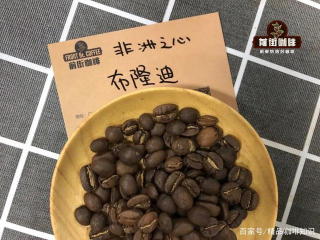
Burundian coffee beans | introduction of Burundian boutique coffee bean producing areas. Are Burundian coffee beans good?
In the 1920s, the Belgians brought coffee to their colonial power, Burundi, where the coffee industry grew steadily until before the civil war broke out in 1993. There is no clear division of producing areas throughout Burundi, as long as the appropriate hydrological conditions, basically suitable for coffee cultivation, but for this country

Description of Burundian Coffee Flavor, Grinding scale, planting Environment, introduction of varieties
Burundian Coffee Flavor description Grinding scale planting Environment Variety introduction Burundian National Coffee Laboratory had the privilege of visiting the Burundian National Coffee Laboratory, an isolated house not far from the coffee park, with state-of-the-art coffee roasting equipment. Each of their staff dressed in white hexagram, placed dozens of kinds in turn on the two cup tables.

The type and price of Burundian coffee in the sun
Professional baristas exchange please follow the coffee workshop (Wechat official account cafe_style) hand-made in Burundi. 15g powder, medium grinding (small Fuji ghost tooth cutter 4 grinding), v60 filter cup, 88-89 degrees water temperature, 30g water injection for the first time, steaming for 27 seconds, water injection to 105g water cut off, wait for the water volume of powder bed to be reduced to half and then water injection, slow water injection until 225g water, do not use water at the end.

How to drink Burundian coffee in the sun
For professional baristas, please follow the coffee workshop (official Wechat account cafe_style) Burundi is located on the south side of the equator in east-central Africa. It is bordered by Rwanda to the north, Tanzania to the east and south, Congo (Kinshasa) to the west, and Lake Tanganyika to the southwest. There are many plateaus and mountains in the territory, most of which are made up of the plateau on the east side of the East African Rift Valley. The national average elevation is 1600 meters, which is known as the mountain country.

What are the famous coffee beans in Africa? How do you drink African coffee? What's a good brand of African coffee?
Professional coffee knowledge exchange more coffee bean information please follow the coffee workshop (Wechat official account cafe_style) African coffee is mainly distributed in the East African plateau strip, north of Yemen, Ethiopia, then branches into the seaside Kenya, Tanzania, as well as the heart of Africa three small countries Uganda, Rwanda, Burundi, and finally to the southernmost Malawi, forming thousands
Fragrant Burundian coffee flavor taste manor boutique coffee beans introduction
There are two major ethnic groups in Burundi, and only about 15 percent of the Tutsi have ruled the country since the 16th century, controlling the civilian population, which is mainly made up of Hutu, plus a very small number of indigenous Twa. This abnormal social structure in which ethnic minorities occupy a high position has buried the evil seed of national instability, and in 1

The Flavor and Taste of Burundian Coffee beans the characteristics of the manor area introduce the origin of Burundian coffee
(I) Forces for the Defence of Democracy in Burundi (Forces pour la Dfense de la Dmocratie au Burundi, FDD), the ruling party, dominated by the Hutu. Once the largest rebel force, it reached a ceasefire agreement with the transitional government in November 2003, formally became a legitimate political party in September 2004, and won elections at all levels in 2005 to become the ruling party. 2007

Burundian coffee bean flavor description planting information characteristics distribution of producing areas
For professional baristas, please follow the coffee workshop (official Wechat account cafe_style) Burundi is located on the south side of the equator in east-central Africa. It is bordered by Rwanda to the north, Tanzania to the east and south, Congo (Kinshasa) to the west, and Lake Tanganyika to the southwest. There are many plateaus and mountains in the territory, most of which are made up of the plateau on the east side of the East African Rift Valley. The national average elevation is 1600 meters, which is known as the mountain country.

Introduction to the treatment of Burundian Coffee beans
The chaos of Burundian coffee has been going on for a long time, with a large number of old and new raw beans mixed together, making this coffee unsuitable for grading. This coffee is rough but mild, and has characteristics similar to Kenyan coffee. The flavor is sweet and fruity, with a slightly spicy finish. Dry aroma (1-5): not suitable for wet aroma (1-5): not suitable for acid

Description characteristics of Burundian Coffee Flavor A brief introduction to the production area of grinding scale by taste treatment method
Brief introduction of Burundian Coffee Flavor description characteristics of Burundian Coffee the characteristics of Burundian coffee: Burundi (Burundi) has the most diverse and successful coffee industry in the world, and has its own characteristics. Burundian coffee is fragrant and has excellent acidity. The Burundian National Coffee Laboratory had the honor to visit the Burundian national coffee with mama.

How about Burundian coffee beans in the sun? which brand of Burundian coffee is better?
For professional baristas, please follow the coffee workshop (official Wechat account cafe_style) Burundi is located on the south side of the equator in east-central Africa. It is bordered by Rwanda to the north, Tanzania to the east and south, Congo (Kinshasa) to the west, and Lake Tanganyika to the southwest. There are many plateaus and mountains in the territory, most of which are made up of the plateau on the east side of the East African Rift Valley. The national average elevation is 1600 meters, which is known as the mountain country.